
The night bus from Cusco to Puno covers almost 240 miles while you sleep and shows you nothing but the terminal at the other end. The same road by daylight is a different trip entirely: a Baroque church painted floor to ceiling, the tallest Inca wall still standing at Raqchi, a pass above 14,000 feet, and a museum of stone sculptures older than the Incas. That daytime version is the tour known as the Route of the Sun, and this guide walks through every stop in the order you reach it, with how long you get and what to look for.
The day at a glance
- Departure: early morning from Cusco, around 7:00 a.m.
- Arrival in Puno: late afternoon, after roughly 10 and a half hours on the road.
- Guided stops: Andahuaylillas, Raqchi and Pukara, plus a photo stop at La Raya Pass.
- Lunch: buffet in the town of Sicuani, roughly halfway.
- Guide: bilingual, in English and Spanish.
- Entrance fees: usually not included. Budget around 50 soles in cash for the three sites.
- Price: Turismo Mer’s Route of the Sun from Cusco to Puno starts at about US$50 per person.
Stop 1: Andahuaylillas, the “Sistine Chapel” of Peru
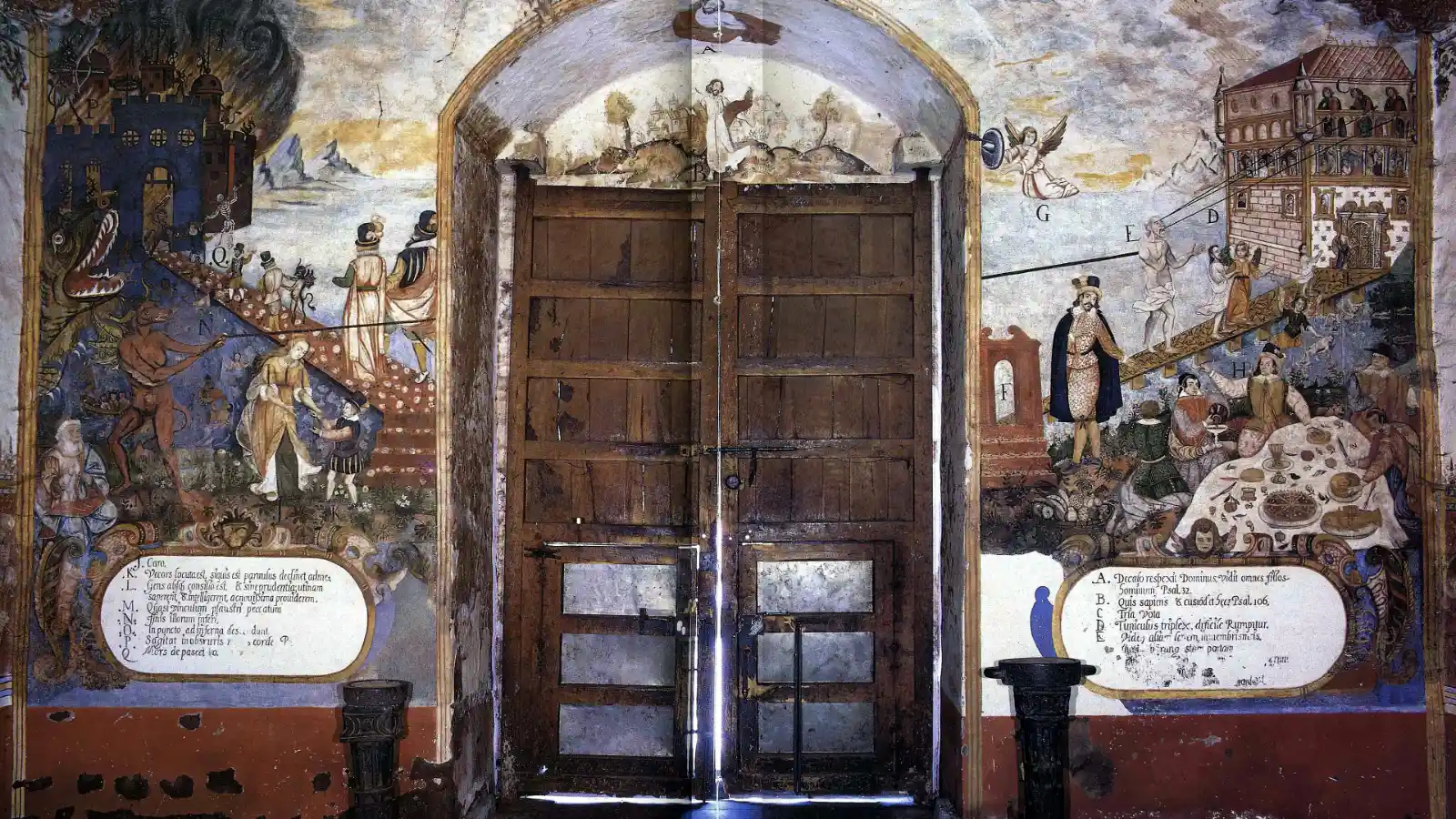
About an hour south of Cusco, the village of Andahuaylillas looks like any other in the valley until you step inside the Church of San Pedro Apóstol, the Andahuaylillas church that most travelers come to see. Every surface is covered: murals, gilded altarpieces, paintings of the Cusco School and a coffered ceiling painted in red, blue and gold. That density is what earned it the nickname “Sistine Chapel of the Americas.”
The plain adobe exterior was built in the early 17th century, and much of the interior decoration dates from the same decades. Look up at the choir loft for the two painted organs, among the oldest in the Americas, and at the entrance mural of the road to heaven and the road to hell, a teaching tool aimed at an Indigenous congregation that could not read Spanish.
Photography is not allowed inside, so give your eyes the full 30 to 40 minutes. Entry is around 15 soles.
Stop 2: Raqchi and the Temple of Wiracocha
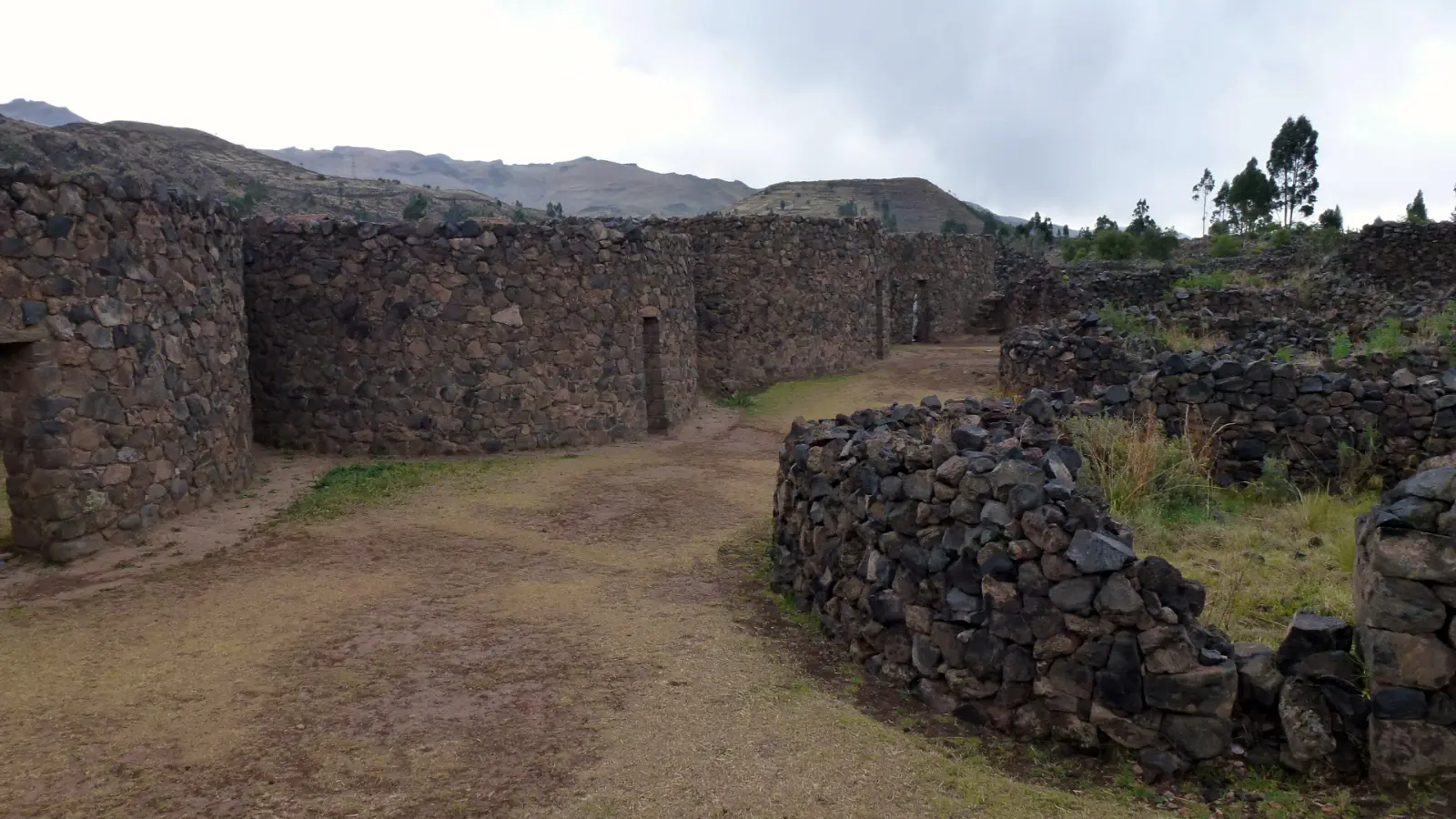
If one stop justifies the whole day, it is this one. Raqchi sits about 75 miles south of Cusco, at roughly 11,300 feet, beside the Vilcanota River, and its centerpiece is the Temple of Wiracocha, dedicated to the Inca creator god. When people talk about the Raqchi temple, this is the building they mean.
The temple was a two-story hall about 300 feet long and 84 feet wide. What survives is its central wall: a stone base topped by adobe that still rises around 46 feet, the tallest Inca structure known today. Next to it you see rows of round storehouses, or colcas, that once held grain and supplies for travelers on the Qhapaq Ñan, the Inca road network now listed by UNESCO as a World Heritage Site.
Travelers who have done the route describe Raqchi as the stop that surprised them most, partly because of its scale and partly because it is rarely crowded. Few visitors walk into the village itself, where a small colonial church with a quiet courtyard faces the plaza and local families sell the pottery Raqchi is known for. The guided visit takes about an hour, and entry is around 20 soles.
Lunch in Sicuani
The buffet stop comes around midday in Sicuani, the largest town on the route. The spread usually mixes Andean dishes with familiar options: soups, quinoa, trout, potatoes in several preparations and salads. More than one traveler has written that the lunch turned out better than they expected from a tour buffet. Eat moderately, though, because the next stop is the highest point of the day.
Stop 3: La Raya Pass at 14,220 feet
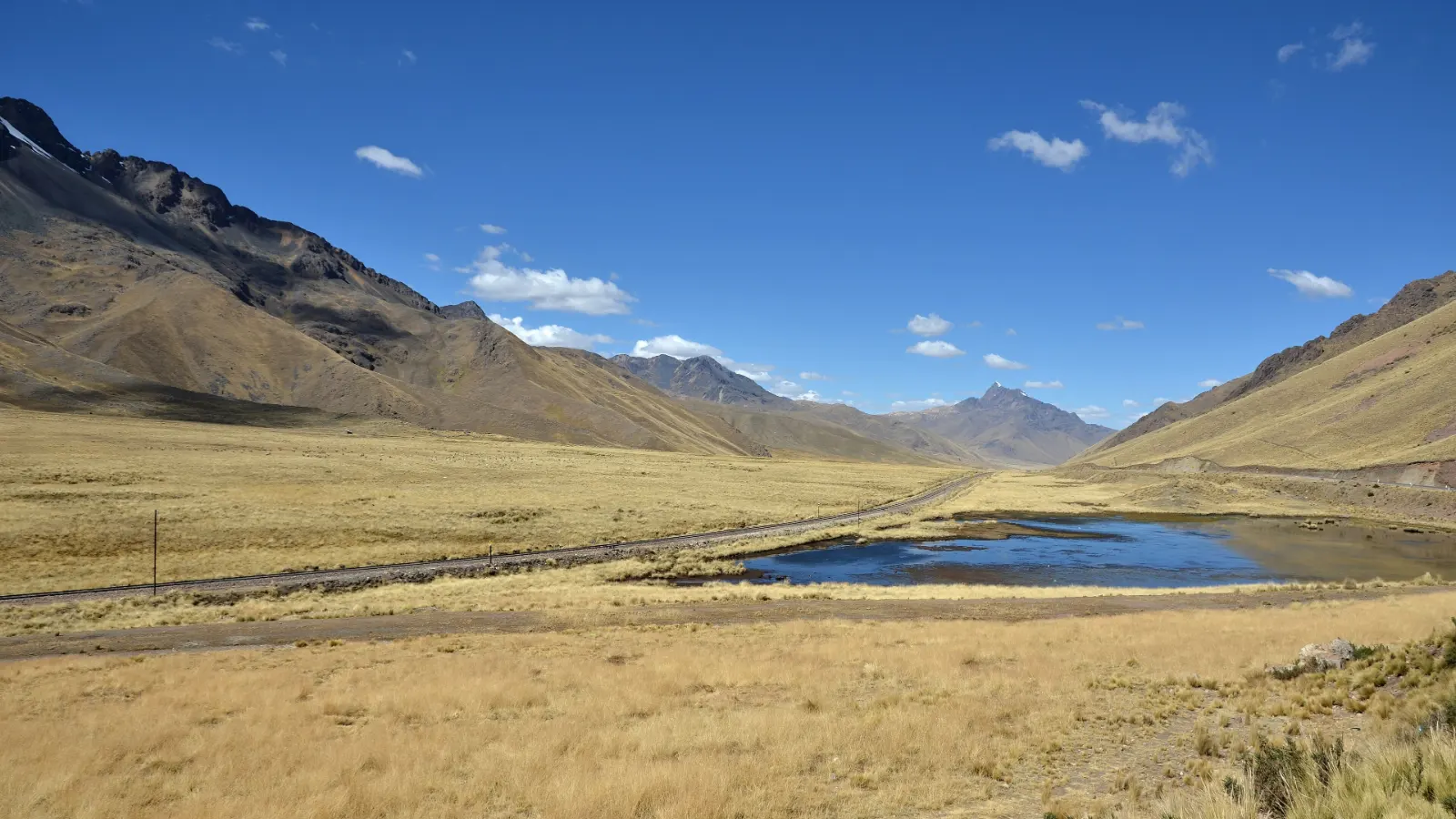
Past Sicuani, the road climbs steadily until it reaches La Raya Pass, at about 14,220 feet (4,335 meters). This is the border between the Cusco and Puno regions and the watershed that separates rivers flowing toward the Amazon from those that drain into Lake Titicaca. The snow-capped Chimboya rises to one side, and herds of alpacas and llamas graze on the open grassland.
The stop lasts only 10 to 15 minutes, long enough for photos and a look at the craft stalls. Walk slowly: at this altitude even a short climb makes your heart race. If you arrived from sea level recently, our guide to altitude sickness in Cusco and Puno explains what to watch for and how to prepare.
Stop 4: Pukara and its Lithic Museum
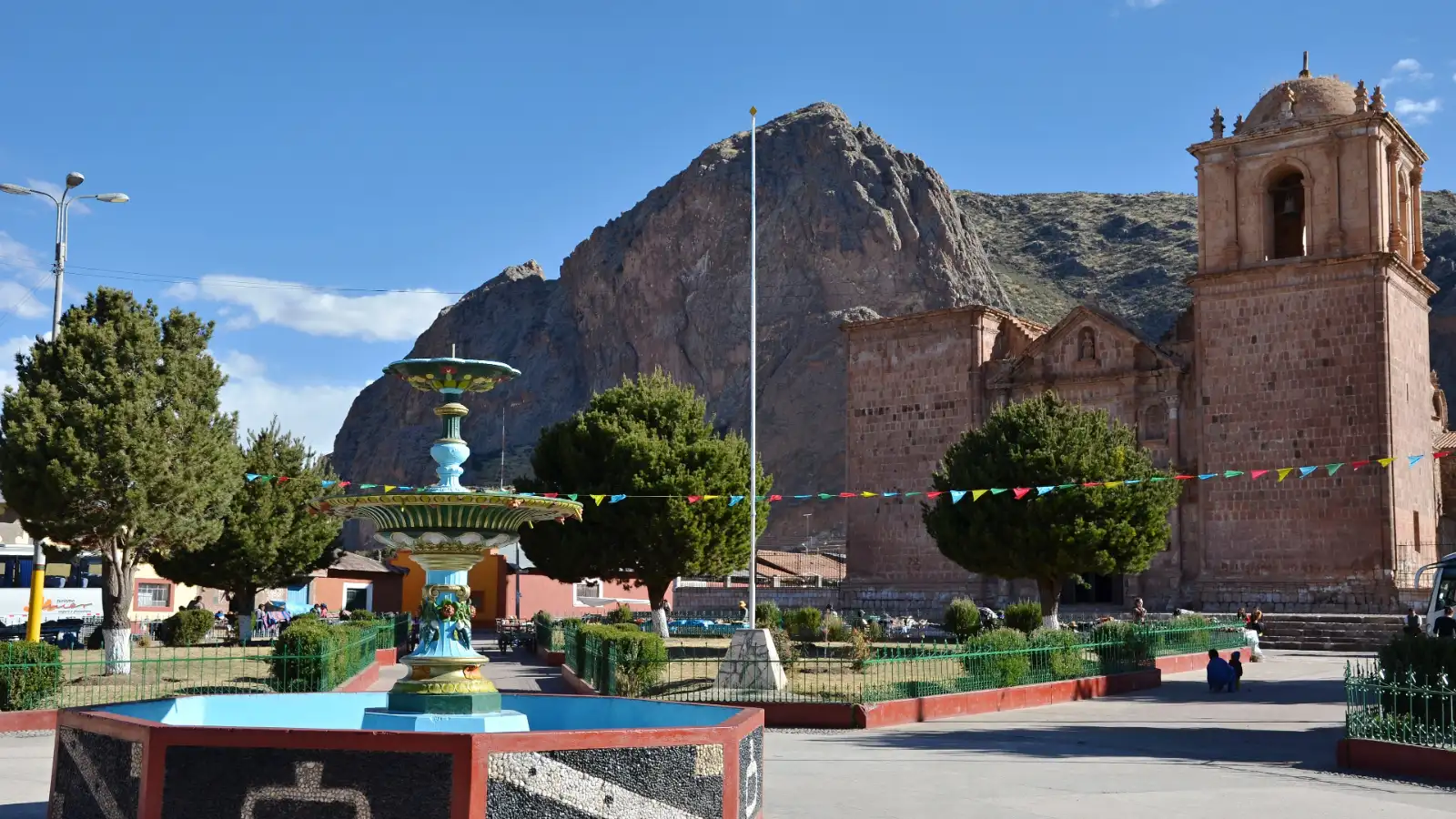
The last visit comes on the Altiplano, already in the Puno region. Pukara, Peru, is a small town today, but it was the center of a culture that flourished roughly two thousand years ago, long before the Incas. Its Lithic Museum displays carved stone stelae and monoliths decorated with human figures, felines and fish.
The town is also the home of the toritos de Pucará, the ceramic bulls you will see on rooftops all over southern Peru, placed there as protection and as a blessing for the household. The guided visit takes about 30 minutes, entry is around 15 soles, and the bus then continues across the plain to Puno, where you arrive in the late afternoon.
How to plan the day
A few details make the difference between a long day on a bus and a good one:
- Carry cash in soles. Entrance fees and the craft stalls at La Raya and Raqchi rarely take cards, and small bills make everything easier.
- Dress in layers. Cusco is cold at 7:00 a.m., Raqchi can be warm at midday, and La Raya is windy and cold year-round.
- Bring sunscreen, sunglasses and a hat. The sun at this altitude burns quickly, even on cloudy days.
- Drink water through the day and go easy on alcohol the night before, since you will gain around 1,400 feet between Cusco and Puno.
- Have your hotel in Puno booked and know how you will get there from the terminal, because you arrive close to dusk.
Doing it in reverse, from Puno to Cusco
The tour also runs from Puno to Cusco, with the same stops in the opposite order: Pukara first, then La Raya, lunch in Sicuani, Raqchi, and Andahuaylillas last. The schedule is almost identical, so the choice depends on the rest of your trip.
The Cusco to Puno direction ends close to Lake Titicaca, which suits travelers who want to head to the islands the next morning. Going from Puno to Cusco puts the most impressive stops, Raqchi and Andahuaylillas, in the afternoon, and you descend gradually, which many people find easier on the body after several days at 12,500 feet. The Route of the Sun from Puno to Cusco has its own departures and prices.
Is the Route of the Sun worth it?
It depends on how much time you have and how you prefer to travel. The three ways to cover the stretch compare like this:
- The day tour: a full day with four stops, with guiding and lunch included. It is the best choice if you have a spare day and want to see the region between the two cities rather than skip it.
- The night bus: the cheapest option, and the one that costs you the least daylight. You sleep on board in a reclining seat and arrive early in the morning. The direct bus from Cusco to Puno makes sense if your schedule is tight, though you see nothing of the road.
- The train: a scenic ride with a dining car, but considerably more expensive and without stops at Andahuaylillas, Raqchi or Pukara.
For most travelers with one extra day, the day tour is the better use of that time. It turns ten hours of transfer into the only chance on a typical southern Peru itinerary to see Raqchi and Andahuaylillas without a separate excursion from Cusco. And arriving in Puno before dark makes the first evening on the lake far easier, especially if you plan to explore Lake Titicaca the next day.
If you want to plan the day around these stops, you can check schedules and book the Route of the Sun from Cusco to Puno with Turismo Mer.