

Puno sits at 3,810 meters above sea level. Cusco sits at 3,400. That 410-meter gap catches many travelers off guard, arriving in Cusco believing they’ve already reached the highest point of their trip, only to discover the toughest altitude comes later. If you’re traveling through southern Peru between these two cities, understanding soroche (altitude sickness) altitude sickness It’s not a minor detail: it’s the difference between enjoying the highlands and spending your trip with a headache.
Altitude sickness, known locally as soroche, happens when the body can’t adjust quickly enough to the lower oxygen levels found high in the Andes. It has nothing to do with fitness. An athletic person can feel it just as much as a sedentary one, because it depends on how fast you climb, not how much you train.
What soroche is and why Cusco and Puno hit harder
Soroche is the body’s reaction to reduced oxygen at altitude, and it hits harder in Cusco and Puno because both cities sit above 3,400 meters, the height at which the body starts to feel the lower atmospheric pressure. The higher you go, the thinner the air, and the less oxygen each breath delivers to your blood.
Symptoms usually appear 6 to 24 hours after arriving, and they’re almost always worse at night. The most common ones are headache, nausea, dizziness, fatigue, loss of appetite, and shortness of breath when climbing stairs or walking uphill.
According to the U.S. Centers for Disease Control (CDC), flying in and sleeping above 3,400 meters without prior acclimatization can cause altitude sickness in up to half of all travelers. That’s reason enough to take the altitude seriously from day one.
Is Puno higher than Cusco?
Yes. Puno sits at 3,810 meters and Cusco at 3,400, making Puno about 410 meters higher. Lake Titicaca, on Puno’s shore, sits at 3,812 meters and is one of the highest navigable lakes in the world. This means that traveling from Cusco to Puno, you’re going up, not down, and your body notices.
Many travelers plan poorly because of this. They assume the worst is over after Cusco and arrive in Puno without care, walking straight into the highest city on the route. Knowing this in advance lets you save energy and precautions for the final stretch.
The smartest route order for acclimatizing
The order in which you visit southern Peru’s cities is, in itself, an acclimatization strategy. Climbing in stages gives your body time to produce more red blood cells and adapt to the reduced oxygen.
The sequence that’s easiest on the body is this one:
- Arequipa (2,335 m): the ideal midpoint. Spending a day or two here prepares your body before climbing to Cusco’s 3,400 meters.
- Cusco (3,400 m): arrive and take it slow on the first day. No long walks or exertion right after stepping off the bus.
- Puno (3,810 m): the highest point, saved for last, when your body has already spent days adapting.
Arriving directly in Cusco or Puno from sea level is what triggers the most soroche. If you can build your route climbing in stages, you gain comfort and lower your risk. Direct routes between these cities let you do exactly that: chaining the ascent at your own pace.
Crossing La Raya: the highest point between Cusco and Puno
Here’s a detail almost no guide mentions and worth keeping in mind. On the journey from Cusco to Puno, the road crosses the La Raya pass, at 4,335 meters. It is the highest point of the entire trip, even higher than Puno.
The crossing is brief, but it’s where soroche can hit hardest during the ride, especially if you step out to take photos and move quickly. On the Route of the Sun, La Raya is a scenic stop with views of the snow-capped peaks, so it pays to be ready: move slowly, breathe deeply, and don’t carry weight through that stretch.

How to prevent soroche before and during your trip
Prevention starts before you climb and continues throughout the journey. These are the measures that actually work:
- Climb in stages. If possible, spend a night at an intermediate altitude like Arequipa or the Sacred Valley before reaching Cusco or Puno.
- Drink more water than usual. Altitude dehydrates you; drink water all day even when you’re not thirsty.
- Eat light. Choose easily digestible foods like soups, quinoa, or rice. Avoid heavy fats.
- Take it easy on the first day. Don’t schedule demanding hikes or excursions as soon as you arrive.
- Avoid alcohol and tobacco for the first 48 hours, as they worsen symptoms.
- Move slowly. Climbing stairs or slopes is far more tiring at altitude; take it easy.
Remedies that actually work: coca, muña, medication and oxygen
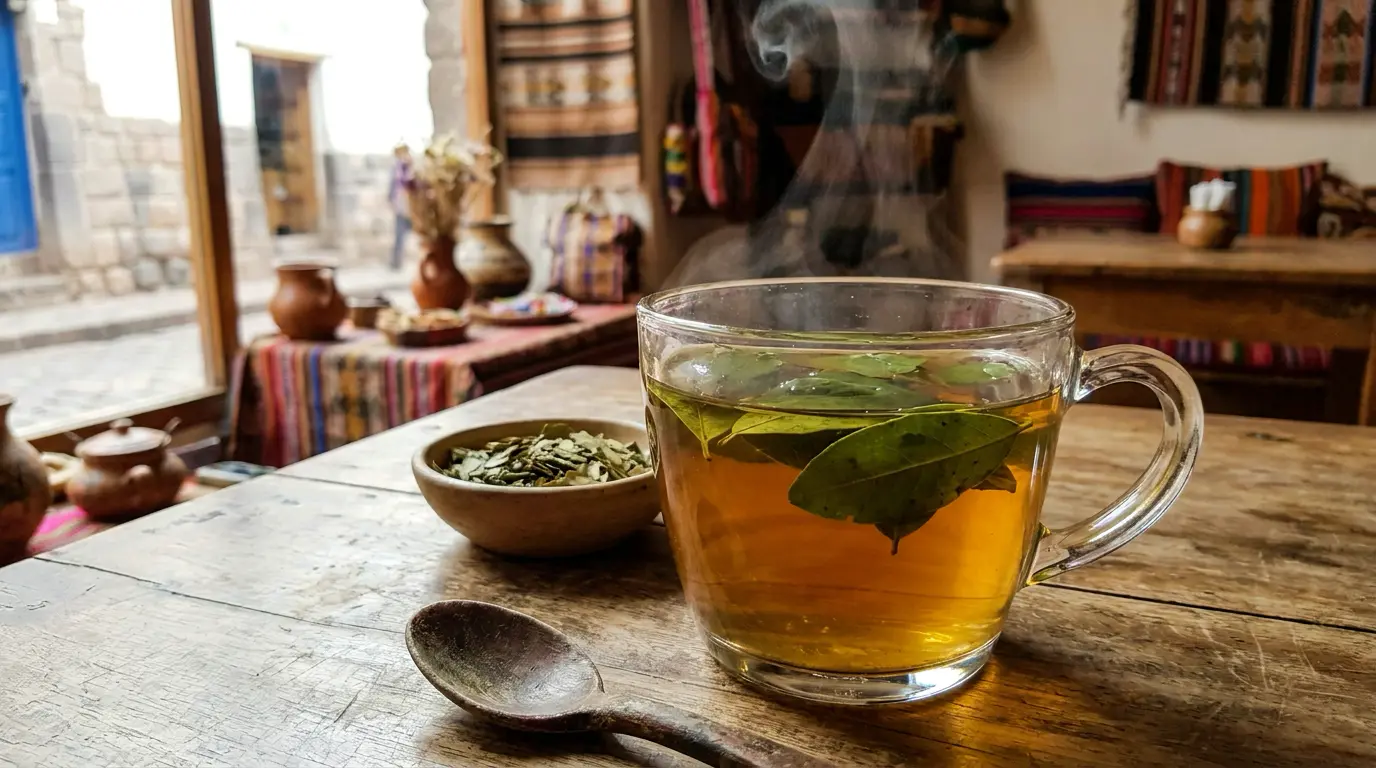
Andean remedies for soroche have been used for centuries and remain the most practical. The coca tea is the best known: you’ll find it in almost every hotel and restaurant in Cusco and Puno. The muña, an Andean mint, serves a similar purpose.
For those wanting something stronger, the acetazolamide (known by the brand Diamox) helps the body adapt faster, but check with your doctor before traveling, since it has side effects for some people.
The oxygen is the most direct fix when symptoms bite. Many high-altitude hotels keep tanks on hand, and portable oxygen cans are sold in stores. Traveling on a bus that carries oxygen on board adds a layer of reassurance right where you need it most, when you’re climbing and there’s no hotel nearby.
Warning signs: when altitude sickness becomes serious
Most cases are mild and pass within two or three days. But some signs call for immediate medical care and descent to lower altitude: a severe headache that won’t ease with rest or painkillers, confusion or trouble walking straight, shortness of breath at rest, a cough with frothy phlegm or chest tightness, and vomiting that prevents you from staying hydrated.
These symptoms can point to serious conditions like high-altitude cerebral or pulmonary edema (HACE and HAPE), and shouldn’t be ignored. If any appear, descending is the priority.
Frequently asked questions
How many days do I need to acclimatize before going up to Puno?
Ideally, give your body two or three days at an intermediate altitude or in Cusco before reaching Puno. If you’re coming straight from sea level, the more gradual the ascent, the better.
Does the night bus make soroche worse?
Not necessarily. Traveling overnight while you sleep can be comfortable, but since symptoms worsen at night, go well hydrated and choose a service that offers oxygen on board just in case.
Does coca tea really work or is it just tradition?
It helps with mild symptoms and hydration, and its use is widespread across the Andes. It doesn’t cure soroche, but it eases discomfort and supports acclimatization well.
Can I take pills to prevent altitude sickness?
Acetazolamide can help, but it requires a prescription and prior medical advice due to side effects. It’s not for everyone, so decide with your doctor before the trip.
What should I bring for soroche on the trip?
Plenty of water, some coca tea or coca candy, warm clothing for the high stretches, and your medication if your doctor prescribed it. Moving slowly through high points like La Raya does the rest.
Planning the order of your routes through southern Peru is the best defense against soroche. If you want to climb at your own pace with oxygen available on the highest stretch, the direct Cusco to Puno route by Turismo Mer is designed to get you to the high plains feeling good.
