

Cusco has much more to offer than its reputation as a stopover on the way to Machu Picchu. In the city and its surroundings, there are Inca temples, monumental ruins, markets, colonial neighborhoods, and high-altitude excursions that can easily fill four or five days.
But there’s something that almost no guidebook takes into account when putting together its lists: Cusco is 3,400 meters above sea level. If you fly in from sea level and head straight to Rainbow Mountain on your first day, you’re in for a rough time. The order in which you do things matters just as much as what you do.
That’s why this guide is organized by level of difficulty, from easiest to hardest, and concludes with something almost no one explains: how to continue your journey by land to the rest of southern Peru.
Before you begin: Cusco is at an elevation of 3,400 meters
Cusco is located at an altitude of 3,400 meters, and symptoms of altitude sickness usually appear between 6 and 24 hours after arrival. That means your first day in the city isn’t a good time for long walks or hiking up hills, even if you feel fine when you get off the plane.
The rule of thumb is simple: spend the first day exploring the historic center, which is mostly flat and at city level. Save the ruins on the hills for the second day, and challenging hikes like Rainbow Mountain for the third day or later.
If you want to fully understand how to prevent altitude sickness throughout your trip to the south, check out our guide on altitude sickness in Cusco and Puno.
The Cusco Tourist Ticket: The First Thing You Need
The Cusco Tourist Ticket (BTC) is the official pass administered by COSITUC that grants access to 16 archaeological sites and museums in the region. The all-inclusive pass costs 130 soles for foreigners (about $35) and is valid for 10 days. For Peruvians, it costs 70 soles.
The fact that surprises travelers the most is this: in those places Single tickets are not sold. Without a ticket, you simply cannot enter Sacsayhuamán or the ruins of the Sacred Valley.
If you’re not going to see everything, there are partial tickets for 70 soles each, divided into three tours:
- Tour I (1 day): Sacsayhuamán, Q’enqo, Puka Pukara, and Tambomachay. This is the classic city tour of the four ruins.
- Tour II (2 days): the city’s museums, the Qosqo Center for Native Art, as well as Tipón and Pikillacta in the Southern Valley.
- Tour III (2 days): Pisac, Ollantaytambo, Chinchero, and Moray, in the Sacred Valley.
Three practical things to know before buying it:
- You need your passport for the foreigner’s rate.
- There is a surcharge for paying by card 3,15%, and they only accept Visa and Mastercard. Yape and Plin also charge a surcharge.
- What is NOT included: Machu Picchu, the Qorikancha Temple itself (15 soles extra), the Cusco Cathedral, Lake Humantay, Rainbow Mountain, and the Inca Trail. All of these are handled through separate channels.
Do the math before you buy. If you’re going to take the city tour plus the Sacred Valley tour, the 130-sol package is a better deal than buying two separate 70-sol tickets.
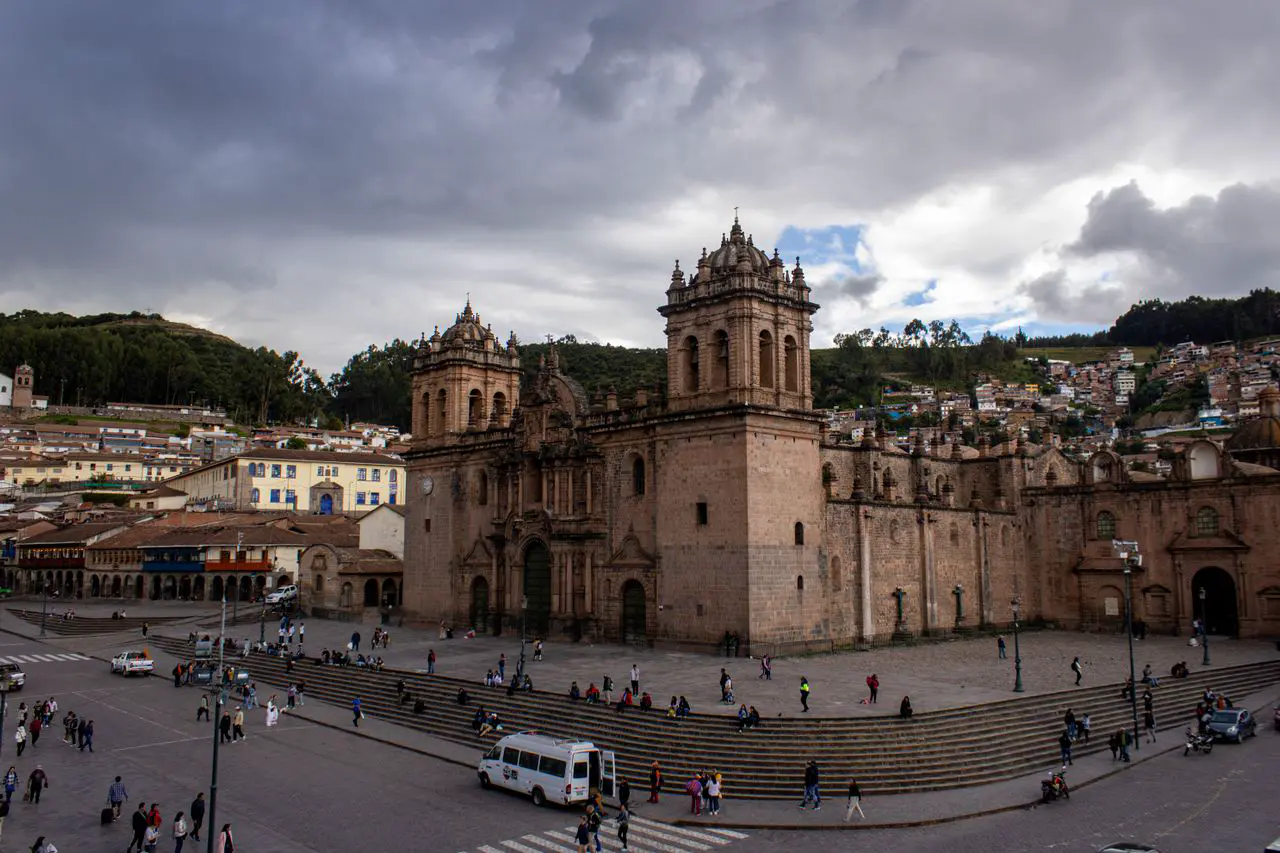
Day 1: The Historic Center, Effortlessly
These are the perfect plans for your first day, when your body is still adjusting. Almost all of them are within walking distance of downtown and don’t involve any steep climbs.
1. The Plaza de Armas
The heart of the city and the best place to start. It’s surrounded by the Cathedral and the Church of the Society of Jesus, with colonial-style arched porticos built on Inca foundations. Sit down on a bench for a while and take it all in: it’s the best way to get a feel for the rhythm of Cusco.
2. The Cathedral of Cusco
Built on the site of Inca Wiracocha’s palace, it blends Spanish Baroque with Andean details. Take a look at *The Last Supper* by Cusco painter Marcos Zapata, where the main dish is a guinea pig. The entrance is via the religious circuit, not the BTC.
3. Qorikancha, the Temple of the Sun
It was the most important temple in the Inca Empire, covered in gold leaf, and the Spanish built the Santo Domingo convent on top of it. What remains of the Inca stonework is impressively precise. Note: Admission to the temple is charged separately (15 soles); the site museum is located within the BTC complex.
4. The San Blas Neighborhood
Steep, narrow streets, artisan workshops, cafés, and a small square with a view. It’s the prettiest neighborhood in the city. Take it slow as you climb, because the slope really takes its toll.
5. The 12-sided stone
On Hatun Rumiyoc Street, on the way to San Blas, on the wall of the ancient palace of Inca Roca. It is the most famous example of Inca stonework. On the same wall, you can make out the shapes of a condor, a puma, and a snake—the three animals of the Andean world.
6. The San Pedro Market
Ten minutes from the Plaza de Armas. Fruit juices, cheeses, breads, textiles, and food stalls where you can have breakfast for just a few soles. It’s the city’s real market, not a tourist version.
7. The Inca Museum
A fine collection of ceramics, textiles, metalwork, and mummies, housed in a large colonial mansion. It’s the best place to understand the historical context before visiting the ruins.
8. The dance show at the Qosqo Center for Native Art
It starts at 6:00 p.m. and is included in the Tourist Pass, so it’s free if you’ve already bought one. Traditional dance and music from the region.
9. Eat and taste pisco
Cusco has a thriving food scene, ranging from local picanterías to signature cuisine. On your first day, it’s best to eat light, so a broth or a quinoa soup is a better choice than a heavy meal.
Now Acclimated: The Ruins Overlooking the City
These sites are located in the highlands surrounding Cusco, at altitudes between 3,600 and 3,800 meters. They involve walking and climbing, so they’re best visited starting on the second day. The first four sites make up Circuit I of the Tourist Pass and can be visited in half a day.
10. Sacsayhuamán
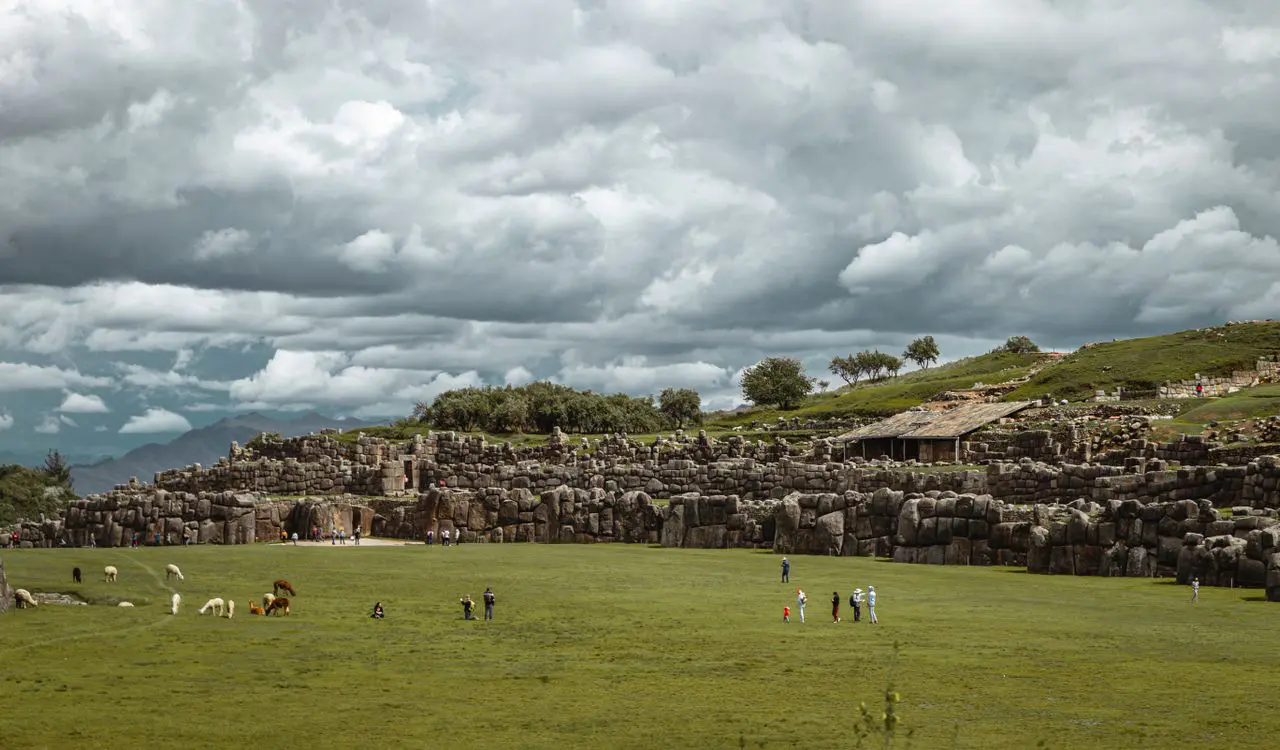
The most impressive site near the city. Walls made of cyclopean blocks, some weighing more than 100 metric tons, assembled without mortar with a precision that is still a subject of debate. It’s about a 20-minute uphill walk from the Plaza de Armas, or you can take a taxi if you’d rather save yourself the effort. Every June 24, it serves as the setting for the Inti Raymi festival.
11. Q’enqo
A rocky outcrop carved with channels, steps, and an altar—likely a ceremonial site associated with water worship. Small but intriguing.
12. Puka Pukara
Known as the “red fortress” because of the color of its stone at sunset, it served as a checkpoint and resting place along the Inca Trail to the Sacred Valley.
13. Tambomachay
A complex of Inca fountains and water channels that are still in use today, associated with the worship of water. The hydraulic system is the most remarkable feature here.
14. The White Christ and the San Cristóbal Lookout
Two spots with panoramic views over the tiled rooftops of Cusco. The White Christ is next to Sacsayhuamán; San Cristóbal is closer to downtown. Ideal at sunset.
Day Trips from Cusco
Cusco serves as a base for several excursions. Here are the main ones, listed from least to most physically demanding.
15. The Sacred Valley
This is the most highly recommended excursion, and it has an advantage that few people take advantage of: the valley is lower than Cusco, at about 2,800 meters, so it’s easier on the body. Pisac, Ollantaytambo, Moray, and the Maras salt mines in one day—or better yet, two. We cover it in depth in our guide to the Sacred Valley.
16. The Southern Valley
The road less traveled: Tipón, with its hydraulic engineering; Pikillacta, a site of the Wari culture; and the church in Andahuaylillas, known as the “Sistine Chapel of the Americas” because of its paintings. Tipón and Pikillacta are included in Circuit II of the ticket.
17. Lake Humantay
A turquoise lagoon at the foot of the snow-capped Salkantay, at an altitude of about 4,200 meters. The hike up is short but challenging due to the altitude. It requires proper acclimatization, and the hikes begin at dawn.
18. Rainbow Mountain (Vinicunca)
The Mountain of Colors, over 5,000 meters high. It’s the toughest hike of them all—and the one most people attempt without being prepared. Don’t schedule it before the third or fourth day at high altitude. It’s paid separately; it’s not included in the Tourist Ticket.
Machu Picchu: The Essentials
Machu Picchu is the main reason most people come to Cusco, so it’s worth covering the basics even though it’s not the focus of this guide. It’s not included in the Tourist Ticket, and tickets must be purchased through a separate channel, with limited availability by time slot and tour route.
The usual way to get there is by train from Ollantaytambo or Cusco to Aguas Calientes, and from there by bus or on foot to the citadel. It’s a good idea to book tickets and the train several weeks in advance during peak season, because they sell out.
A practical tip: Since Ollantaytambo is the main station, many travelers take advantage of this and combine a visit to the Sacred Valley with a trip to Machu Picchu as part of the same leg of their itinerary, rather than returning to Cusco between the two.
The Best Time to Visit Cusco
The best time to visit Cusco is during the dry season, from May to September, when there are sunny days, little rain, and the hiking trails are in better condition. It’s also the high season, so there are more people and prices go up.
The rainy season runs from November to March, peaking between January and February. It rains mostly in the afternoon; there are fewer tourists and prices drop, but some hikes become more challenging. The Inca Trail is closed throughout February for maintenance.
April and October are the shoulder months and usually offer the best balance between weather and crowds. And if you’re interested in festivals, June 24 is Inti Raymi, the Inca celebration of the solstice at Sacsayhuamán, when the city is packed with people.
How many days do you need in Cusco?
To explore the city and the Sacred Valley at a leisurely pace, you’ll need at least three or four days. If you’re also going to Machu Picchu, add two days, and if you want to visit Rainbow Mountain or Humantay, add one more day for each excursion.
A realistic breakdown for five days would look like this:
- Day 1: the historic district, at your own pace, to get your bearings.
- Day 2: Circuit I: The Four Ruins Overlooking the City.
- Day 3: The Sacred Valley, which is also at a lower elevation.
- Day 4: Machu Picchu.
- Day 5: a hike in the mountains, or the South Valley if you prefer something more peaceful.
It’s possible to stay for less than three days, but that means rushing through everything while your body is still adjusting.
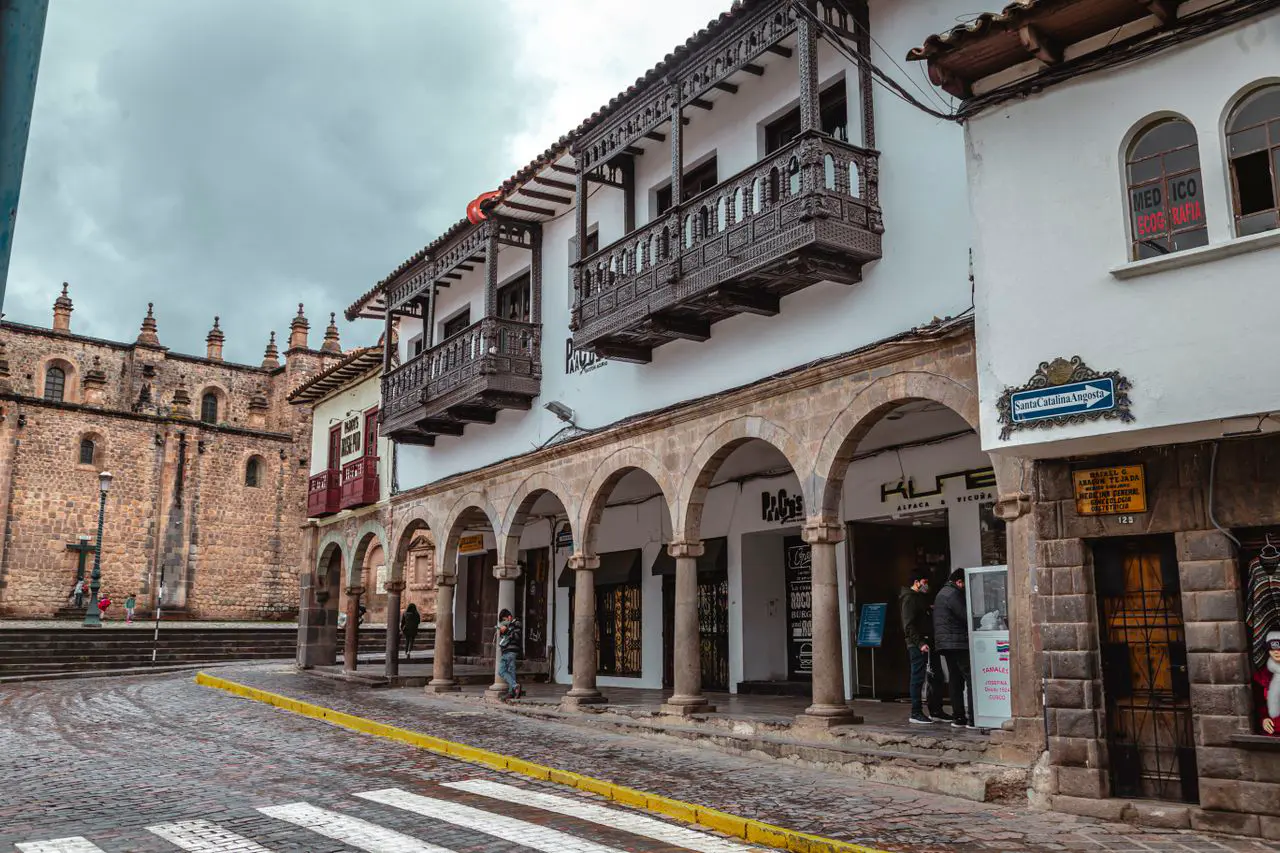
Leaving Cusco: Continue south toward Puno or Arequipa
Here’s something that almost no guidebook on Cusco mentions. Almost all of them end the same way: you visit Machu Picchu, then fly back to Lima. But Cusco is the natural starting point for an overland tour of southern Peru, and doing it this way saves you on flights and lets you explore the altiplano.
From Cusco, there are two logical routes to take:
- Onward to Puno and Lake Titicaca. You’ll gain altitude (Puno is at 3,810 meters), crossing the La Raya Pass at 4,335 meters. If you’ve already spent a few days acclimating in Cusco, this is the perfect time to do it.
- On the way to Arequipa. A drop in elevation (Arequipa is at 2,335 meters), which feels like a relief after days at high altitudes. From there, you can access the Colca Canyon.
The decision depends on your overall itinerary. If you’re going to do both, the most comfortable order for your body is Cusco, Puno, and then Arequipa, because you end up going downhill instead of uphill at the end.
Direct interprovincial buses cover these routes with terminal-to-terminal service, which eliminates the need to transfer and reduces wear and tear on tour buses caused by multiple stops. The direct route from Cusco to Arequipa It connects the ancient Inca capital with the White City, and there’s also a direct connection to Puno if you’d rather visit Lake Titicaca first.
Frequently asked questions
Is Cusco worth visiting beyond Machu Picchu?
Yes. Between the historic center, the four ruins on Circuit I, the Sacred Valley, and the Southern Valley, there’s enough to see for four or five days—and that’s not even counting Machu Picchu. Cusco is a destination in its own right, not just a stopover.
How many days do I need in Cusco?
Three or four for the city and the Sacred Valley, five or six if you include Machu Picchu, and one more for each high-altitude excursion, such as Rainbow Mountain or Humantay.
What does the Cusco Tourist Ticket include?
The all-inclusive pass costs 130 soles for foreigners, is valid for 10 days, and covers 16 sites, including Sacsayhuamán, the ruins of the Sacred Valley, museums in the city, and the dance show. It does not include Machu Picchu, the Qorikancha Temple, the Cathedral, Rainbow Mountain, or Humantay.
When is the best time to visit Cusco?
From May to September, the weather is dry, though there are more people and prices are higher. April and October offer the best balance. From November to March, it rains, especially in the afternoons.
What should you do on your first day in Cusco because of the altitude?
Stay in the historic center, which is mostly flat: Plaza de Armas, the Cathedral, Qorikancha, the San Pedro Market, and a few museums. Save Sacsayhuamán for the second day and the high-altitude excursions for the third day or later.
How do I get from Cusco to Puno or Arequipa?
By direct interprovincial bus, which offers the most frequent departures and terminal-to-terminal service. On the way to Puno, you’ll climb in elevation as you cross La Raya; on the way to Arequipa, you’ll descend, which usually feels better after several days in the highlands.
Cusco rewards those who take their time. Plan your itinerary based on how your body adjusts, and when you’re ready to continue, southern Peru takes you on to Lake Titicaca and the Colca Canyon by road, at your own pace.
