

The floor gives way slightly underfoot. That’s the first sensation you feel when you step off the boat onto an Uros island: a soft surface made of layers of dried totora reeds that sinks a few centimeters with each step and then springs back up. No one warns you about that beforehand. And it’s the detail that explains everything else, because the Taquile Island The floating villages and the floating islands on the lake are two very different ways of living on the water, and it’s a good idea to know which one you’ll be seeing before you buy the tour.
The Floating Islands of the Uros and How They’re Made
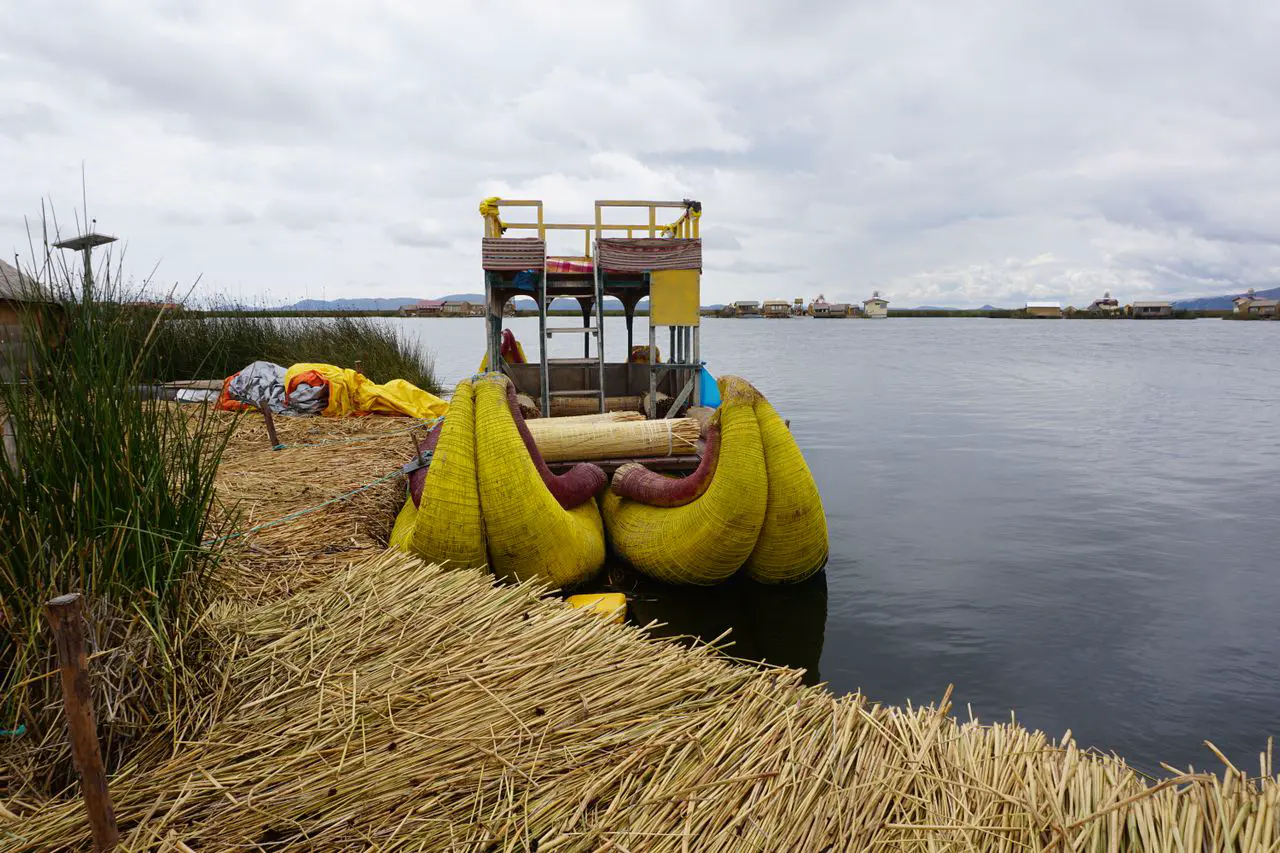
The Uros Islands are about five to seven kilometers from the port of Puno, a twenty- to thirty-minute boat ride away. They are not natural islands: they are built from totora, the reed that grows in the shallow areas of the lake.
The method is what holds everything together. Blocks of totora root—which float on their own—are cut, and layers of crisscrossed rushes are tied onto them. The bottom layer rots away in the water, and the top layer is replaced every few weeks. A well-maintained island lasts for years, but it is never the same island: it is constantly renewed from the top down.
They also use totora reeds to build houses, rafts, and lookout points, so the entire landscape has a single color and a single texture. The number of islands varies depending on the source and the year, because they merge and are abandoned; estimates range from sixty to one hundred.
Who Are the Uros?
The Uros are one of the oldest peoples of the Altiplano. The most widely accepted theory regarding the origin of the islands is that they were built for defensive purposes: constructing floating territory allowed them to move around and keep their distance from the more warlike groups on the mainland.
Their original language, Uro or Pukina, has practically disappeared. Today, the communities on the lake speak Aymara, the result of centuries of coexistence and intermarriage with the Aymara peoples living on the shore. They make their living from fishing, handicrafts, and tourism, and many families divide their time between the island and the city of Puno.
It’s worth saying plainly: that mix of traditional life and the tourism industry is real—and not always easy to look at. We’ll come back to that later.
Taquile, the island where men knit
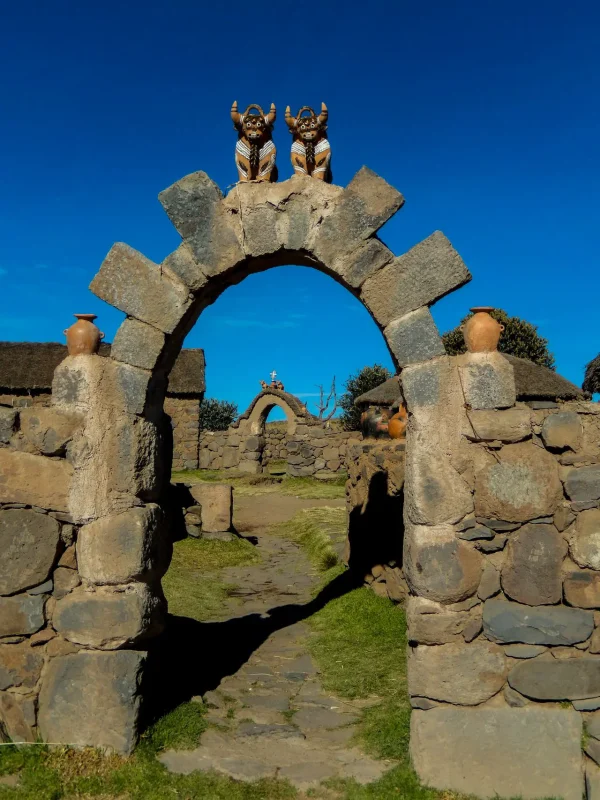
Taquile is something else entirely. It is an island connected to the mainland, about 45 kilometers from Puno, with agricultural terraces, stone paths, and a Quechua-speaking community of a couple thousand people. The boat ride takes between two and a half and three hours from the port.
What made her famous is her textile art. In Taquile, the women weave, and Men knit: The chullo—the Andean hat with earflaps—is made by the people themselves, and they learn to make it from childhood. The quality of the weaving is a social matter, not a decorative one: the designs convey marital status, rank, and group affiliation.
UNESCO proclaimed Taquile’s textile art a Masterpiece of the Oral and Intangible Heritage of Humanity in 2005 and inscribed it on the Representative List in 2008.
Here’s a practical tip that often comes as a surprise: the town is uphill from the pier. The climb is short but steep at that altitude, so it’s best not to save it for your first day on the altiplano.
Amantaní and the option to sleep on the lake
Amantaní is the third island on the tour and the only one that requires an overnight stay. The usual arrangement is to stay with a local family, share a dinner, and hike up the hill at sunset.
It takes two full days, and it’s not exactly a comfortable trip: simple houses with no heat and cold nights. But in return, it’s what almost everyone remembers about the lake years later.
Are the Uros too touristy?
It is the most common criticism of the destination and deserves a direct response rather than a defense.
Yes, the standard tour feels staged. The reason is simple: the half-day excursion divides the time between the boat ride, a visit to the island, and the return trip, leaving about thirty minutes on land. In half an hour, there’s only time for a demonstration of how the island is set up and the sale of handicrafts. There’s no time for anything else, and it’s that crammed schedule that creates the feeling of a staged performance.
What you can do:
- Go during off-peak hours. The boats leave in a group first thing in the morning. Later on, there are fewer people on each island.
- Choose an island off the beaten path. The first ones you visit are the ones closest to the port and the most crowded.
- Sleeping on the lake. Spending the night on an island completely changes the experience, because the encounter is no longer just a 30-minute transaction.
- Buy directly from the family. The income from handicrafts stays on the island; the income from the boat doesn’t always.
That said: even in the most condensed format, seeing how a floating island is built is an experience unlike any other.
Half-day, full-day, or overnight: how to choose
Three formats account for ninety percent of visits:
- Half a day, just Uros. About three or four hours in total. This is a good option if you’re short on time or if the lake isn’t your top priority.
- Full-day tour: Uros + Taquile. The most common one. It departs first thing in the morning, visits both islands with lunch on Taquile, and returns in the mid-afternoon.
- Two days, including an overnight stay in Amantaní. Includes Uros, Amantaní, and Taquile the next day.
Prices vary by agency and season, and in addition to the boat fare, you’ll need to pay the entrance fees for each island separately. It’s a good idea to confirm this when booking and to bring cash, because you can’t pay by card on the islands.
Your bus determines which excursion you’ll be able to take
Here’s the part that no guidebook about the lake mentions, and it’s the one that ruins the most itineraries.
Lake tours depart from the pier first thing in the morning. That means the time you arrive in Puno determines whether your lake tour will be on the day you arrive or the next day:
- If you arrive on the direct Cusco to Puno bus, which leaves at 10:00 p.m. and arrives at 5:00 a.m., so you’ll have the morning free. You can drop off your luggage and spend the entire day exploring Uros and Taquile that same day.
- If you’re coming via the Ruta del Sol, the daytime guided tour that departs at 7:00 a.m. and arrives at 5:30 p.m., with stops in Andahuaylillas, Raqchi, La Raya, and Pukara; you’ll arrive in the late afternoon. You’ll visit the lake the next day, so you’ll need to stay one more night in Puno.
- From Arequipa, the direct bus also runs at night and arrives in the morning, following the same schedule as the one from Cusco.
Neither option is better; they’re just different kinds of trips. The direct trip saves you a day on your itinerary; the Ruta del Sol turns the transfer into a day of guided tours. What you don’t want to do is choose without knowing what you’re getting into, book the lake tour for your arrival day, and find out that the boat has already left.
Cost, season, altitude, and what to pack
The dry season, from May to October, is the best time for boating: clear days and calm waters. It’s also the busiest time of year. Between November and April, there are fewer people, but a higher chance of rain and cloudy afternoons.
As for altitude, the lake is at 3,812 meters and Puno is a little higher. A day at the lake means direct sunlight on the water, wind, and some walking on Taquile, so it’s not the best plan for your first few hours in the Altiplano. If you’ve just arrived, check out the guide to How to Prevent Altitude Sickness.
What to bring: sunscreen and a hat, because the sun’s reflection off the water burns more than it seems; layers of clothing, because the boat is cold and the midday sun is strong; cash in small bills; and comfortable shoes for the hike up Taquile.
Frequently asked questions
How long does the tour to the Uros and Taquile Islands last?
The full-day tour takes between eight and nine hours: an early morning departure, about thirty minutes on the Uros, a two-and-a-half-hour boat ride to Taquile, lunch and a walk on the island, and a return in the mid-afternoon.
Can you visit the Uros without booking a tour?
Yes. Shared boats depart from the port of Puno for the nearest islands. It’s the cheapest option, although there’s no guide and no explanation of how the islands were built—which is the most interesting part of the visit.
Is Taquile worth visiting if I’ve already seen the Uros?
They are very different experiences. The Uros are a marvel of construction on the water; Taquile is a farming community with a textile tradition recognized by UNESCO. If you can only choose one and you’re interested in living culture, go to Taquile.
Can you sleep on the islands?
In Amantaní, homestays are the norm, and some of the Uros Islands also welcome guests. The houses are simple and the nights are very cold, so it’s a good idea to ask about warm clothing before booking.
Can I visit the lake on the same day I arrive in Puno?
Only if you arrive on the night bus, because the boats leave early. If you arrive in the afternoon, the tour will be rescheduled for the next day.
If Lake Titicaca is the reason you’re going to Puno, first figure out how you’ll get there: that will determine how many days you’ll spend at the lake. You can check schedules and buy your ticket on the Ruta del Sol from Cusco to Puno or the direct service.
