
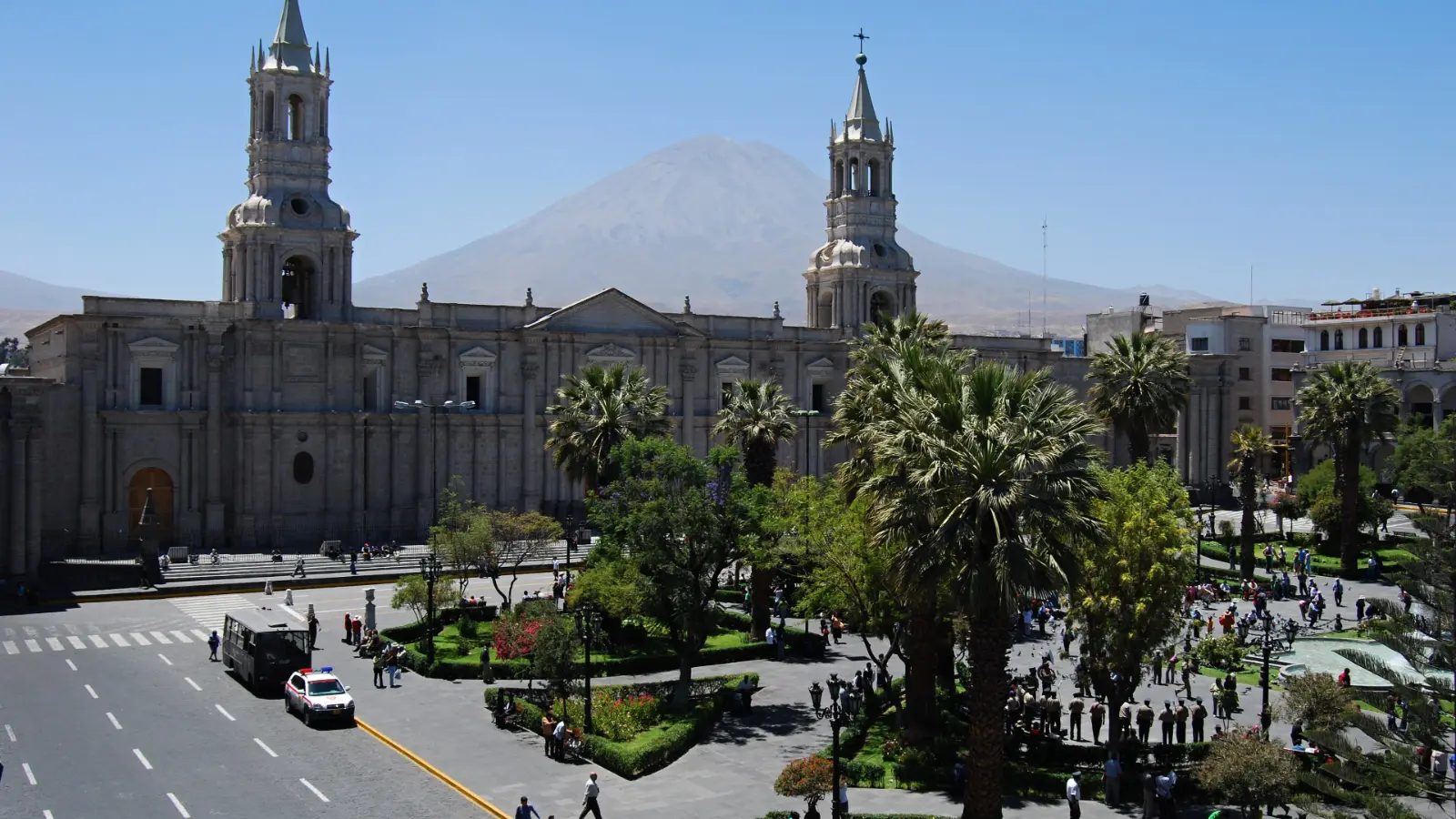
Stand in the Plaza de Armas of Arequipa, Peru, early on a clear morning and the city explains itself: white stone arcades, a cathedral built from volcanic rock, and the snow-streaked cone of El Misti rising behind the rooftops. Plenty of travelers only pass through on their way to Colca Canyon. That is a mistake, and not only because the city is beautiful. At about 7,660 feet (2,335 meters), Arequipa is also the gentlest place in southern Peru to get used to altitude before Lake Titicaca or Cusco.
Why Arequipa is called the White City
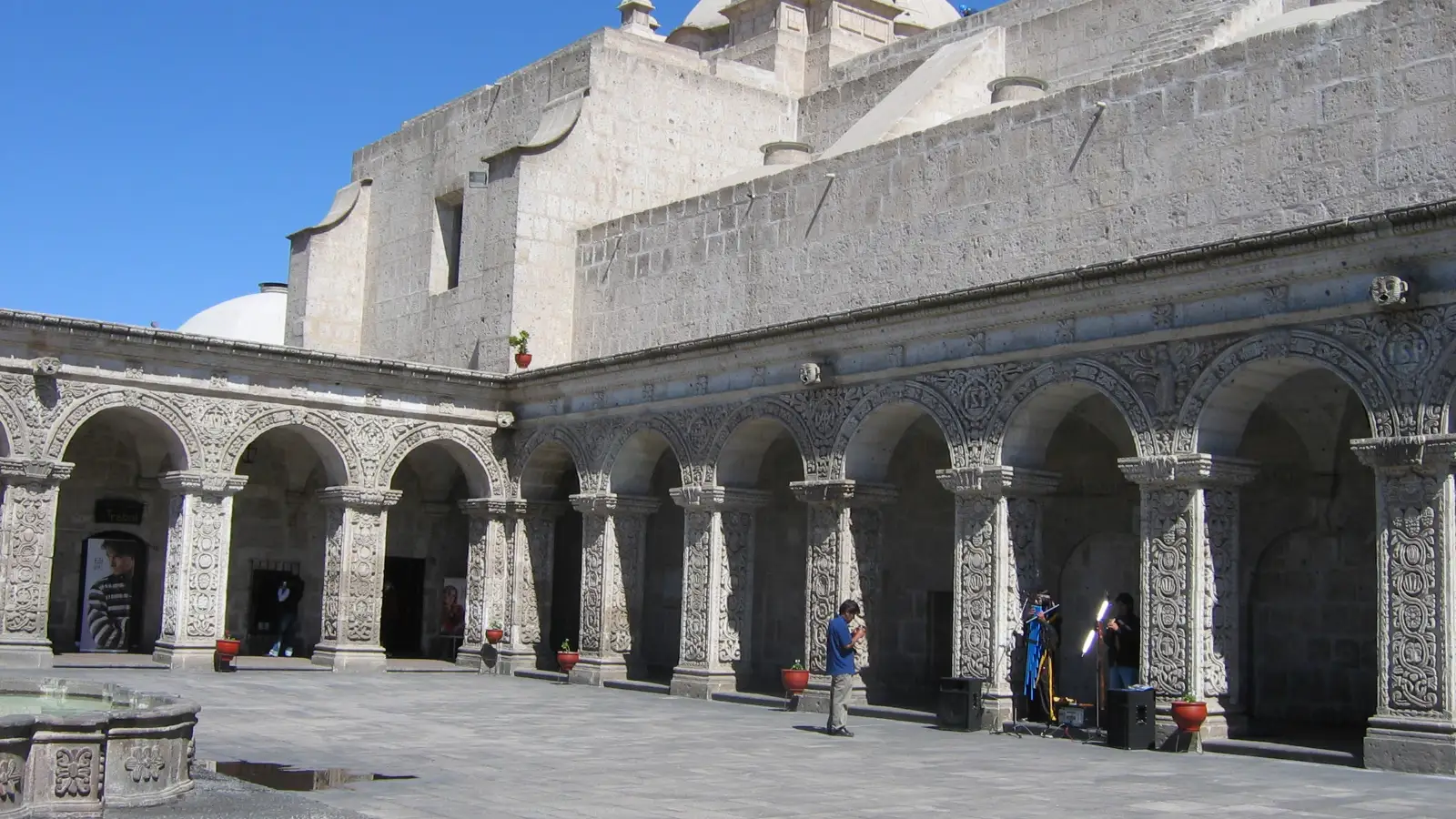
Arequipa’s historic center is built from sillar, a pale volcanic stone quarried from the slopes around the city. It gives the colonial churches and mansions their white color and their carved, almost lace-like facades. The historic center has been a UNESCO World Heritage Site since 2000.
The setting is just as striking. Three volcanoes frame the city: El Misti, at about 19,100 feet (5,822 meters), the higher Chachani, and the jagged Pichu Pichu. On most days of the dry season you see at least one of them from the street.
Where to spend your time in the city
The Plaza de Armas and the cathedral
The main square is the natural starting point, lined on three sides by two-story stone arcades and on the fourth by the cathedral, which runs along the entire north side of the square. Late afternoon, when the sun turns the sillar warm, is the best moment. The arcades are also where you will find rooftop terraces with views of the cathedral towers and the volcanoes.
Santa Catalina Monastery
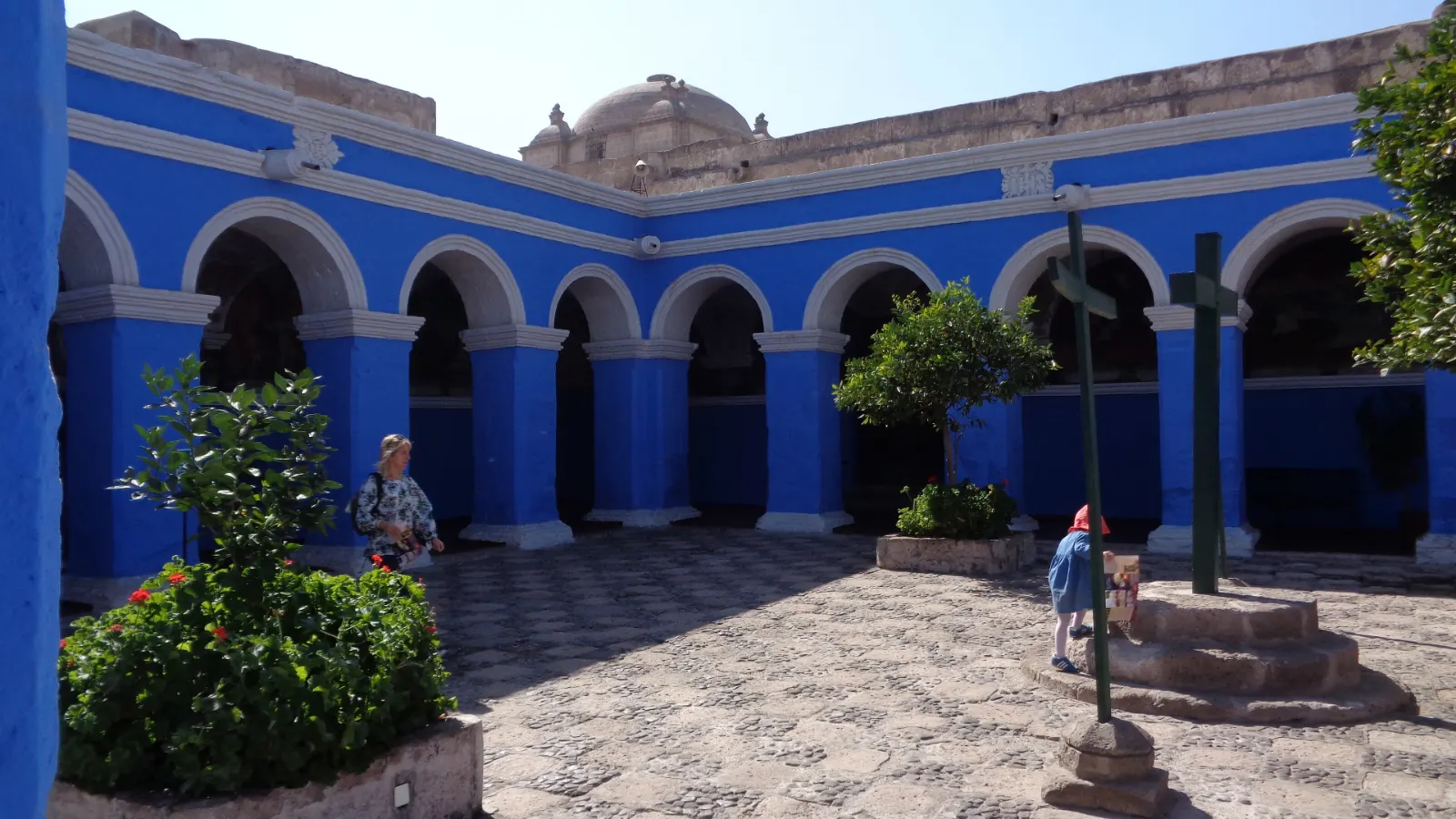
If you only pay for one visit in Arequipa, make it this one. Founded in 1579, the monastery fills an entire city block and works like a small walled town, with narrow streets named after Spanish cities, cloisters, kitchens, and cells painted in deep blue and terracotta red. The entrance fee is high by local standards, around 45 to 55 soles depending on the season, and it is the one thing travelers most often hesitate over. Most end up saying it was the highlight of their stay, so set aside two to three hours and go in the late afternoon for the softest light.
Museo Santuarios Andinos
A short walk from the plaza, this small museum is built around Juanita, an Inca girl offered in a ritual on the summit of the Ampato volcano and found frozen there in 1995. The guided visit explains the Inca practice of high-altitude offerings and is one of the most memorable museum experiences in southern Peru.
Yanahuara and its viewpoint
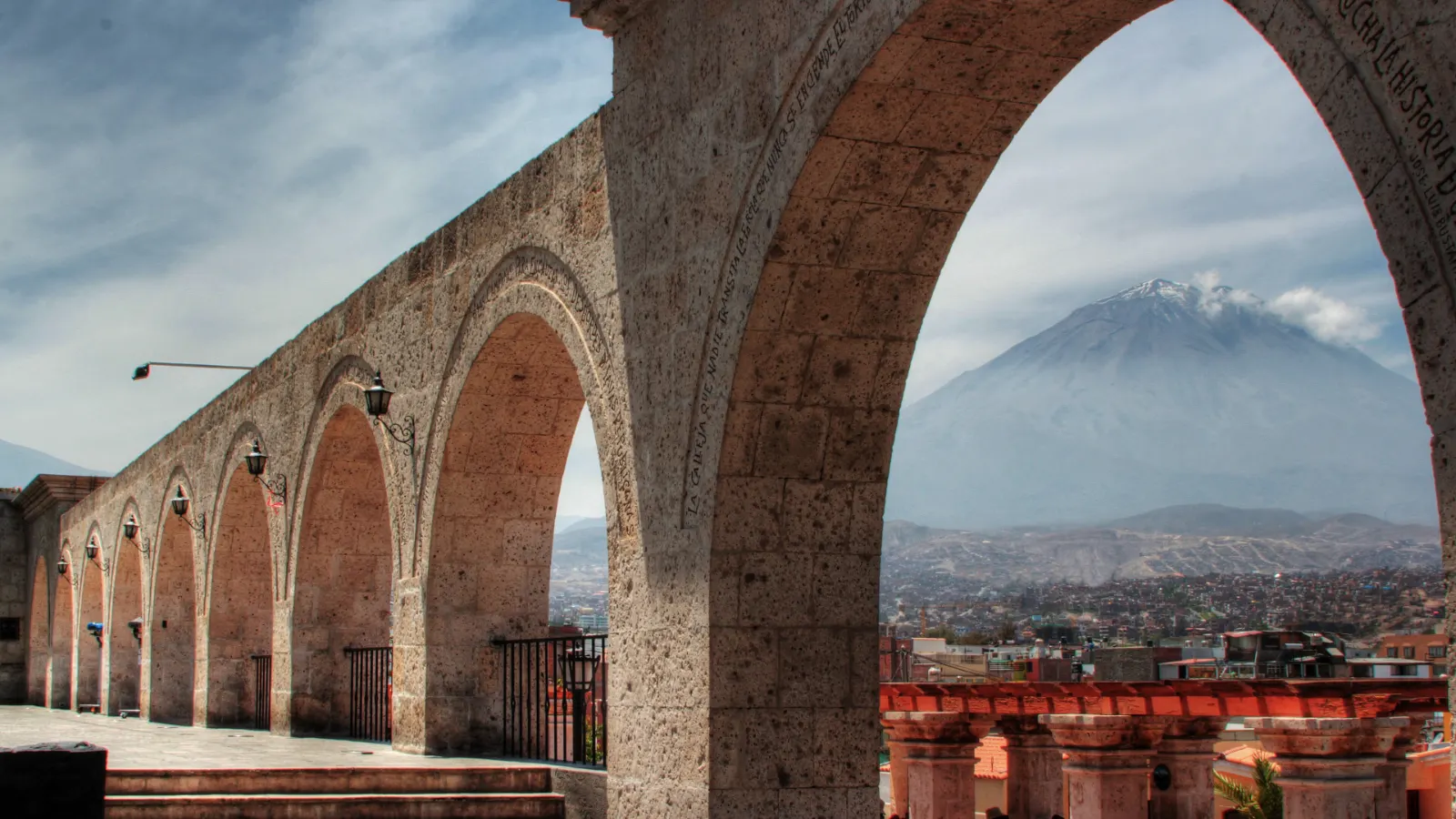
Across the Chili River, the neighborhood of Yanahuara has a small plaza with a row of sillar arches carved with inscriptions and one of the classic views of El Misti. Walk up the cobbled, pedestrian Leoncio Prado street to get there, and time it for sunset.
San Camilo Market and a picantería lunch
Arequipa takes food seriously. San Camilo Market is the place for fresh juices and for queso helado, a cinnamon-scented frozen dessert sold all over the city that, despite the name, contains no cheese. For lunch, look for a picantería, the traditional Arequipa restaurant, and order rocoto relleno (a spicy pepper stuffed with meat), chupe de camarones (river shrimp chowder), or, on Sunday mornings, adobo, a pork stew that locals eat as a weekend ritual.
Beyond the city: Colca, the Sillar Route, and the volcanoes
Arequipa is also the base for the region’s big day trips:
- Colca Canyon: about three to four hours away, famous for Andean condors in the morning and terraced valleys. It is best done as a two-day trip; see our guide to the Colca Canyon.
- The Sillar Route: a half-day visit to the quarries of Añashuayco, where you see how the white stone is cut by hand and the carved canyon walls nearby.
- El Misti: a demanding two-day climb for experienced hikers, only after proper acclimatization.
A common mistake is heading to Colca on the morning after you arrive. Its highest pass reaches roughly 16,000 feet, far above the city, so give yourself at least a day in Arequipa first.
Arequipa as an altitude stepping stone
Here is how the altitude climbs on a typical southern Peru route:
- Arequipa: about 7,660 feet (2,335 meters).
- Cusco: about 11,150 feet (3,400 meters).
- Puno and Lake Titicaca: about 12,500 feet (3,810 meters).
Spending two days in Arequipa before going higher lets your body adjust in steps instead of jumping straight from sea level to Cusco. It is the same logic behind visiting Puno before taking on Rainbow Mountain from Cusco, which we explain in our Rainbow Mountain guide. For symptoms and prevention, see our guide to altitude sickness in Cusco and Puno.
How many days in Arequipa, and where it fits in your route
Two full days cover the city at a comfortable pace: one for the center and Santa Catalina, one for Yanahuara, the market, and a picantería lunch. Add two more if you want Colca.
From Arequipa, the overland options continue east:
- To Lake Titicaca first: the direct overnight bus from Arequipa to Puno leaves at 10:30 p.m. and arrives around 5:00 a.m., in time for a morning on the lake. Our Lake Titicaca guide helps you plan the days there.
- Straight to Cusco: the direct overnight bus from Arequipa to Cusco leaves at 8:30 p.m. and arrives around 7:30 a.m., on a sleeper seat that reclines 160 degrees.
- Arriving from Cusco or Puno: the reverse routes, from Cusco to Arequipa and Puno to Arequipa, are also available.
Both Turismo Mer departures leave from the main Arequipa bus terminal; plan to be there at least 30 minutes before departure.
A few practical notes
Arequipa has one of the sunniest climates in Peru, so the sun is strong even when the air feels cool: wear sunscreen and a hat. The dry season, from April to November, brings the clearest views of the volcanoes. The historic center is compact and easy to explore on foot, and it is generally considered one of the safer cities in the country, though the usual big-city precautions apply at night and in crowded markets.
If you are deciding whether to fit Arequipa into your trip, our answer is simple: give it two days. You will leave with a city most visitors underestimate and a body better prepared for everything that comes after.